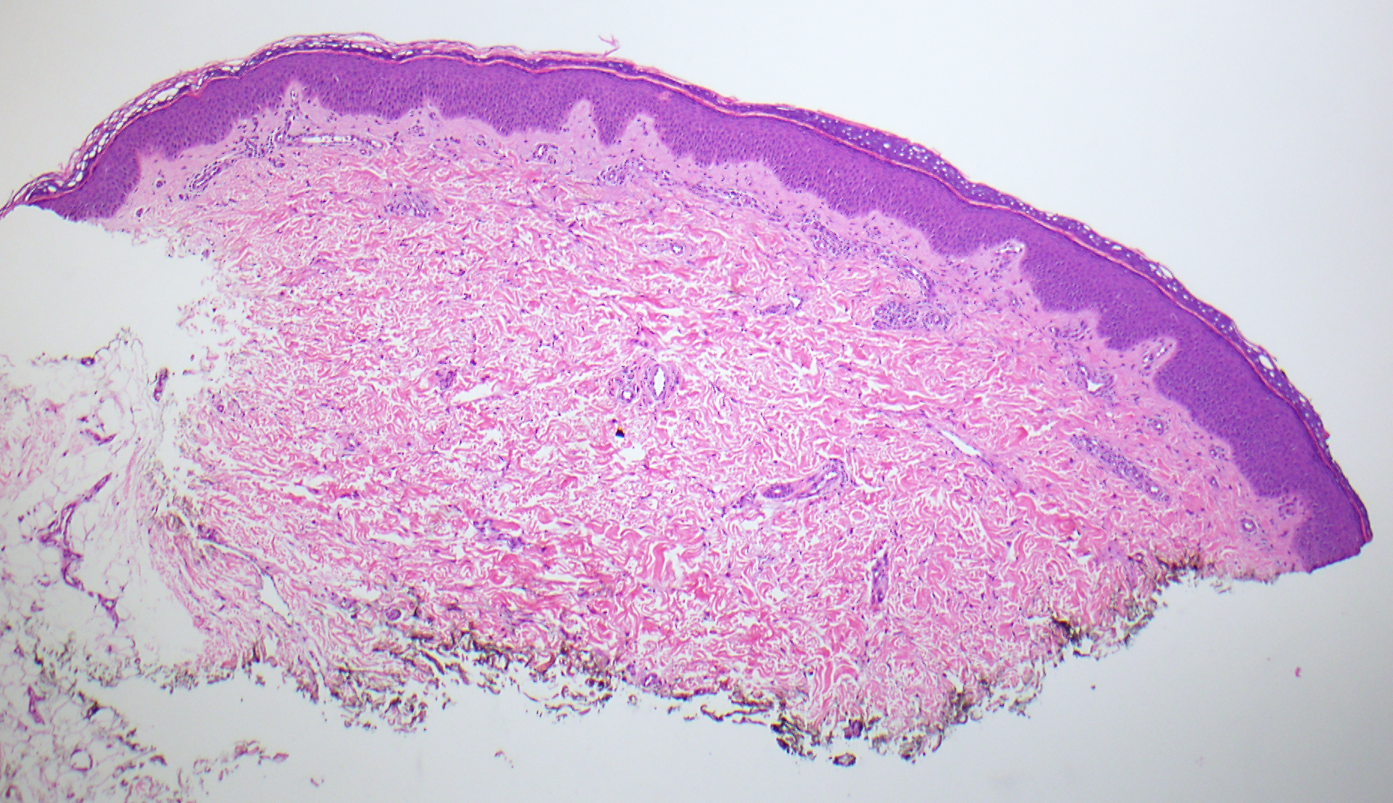
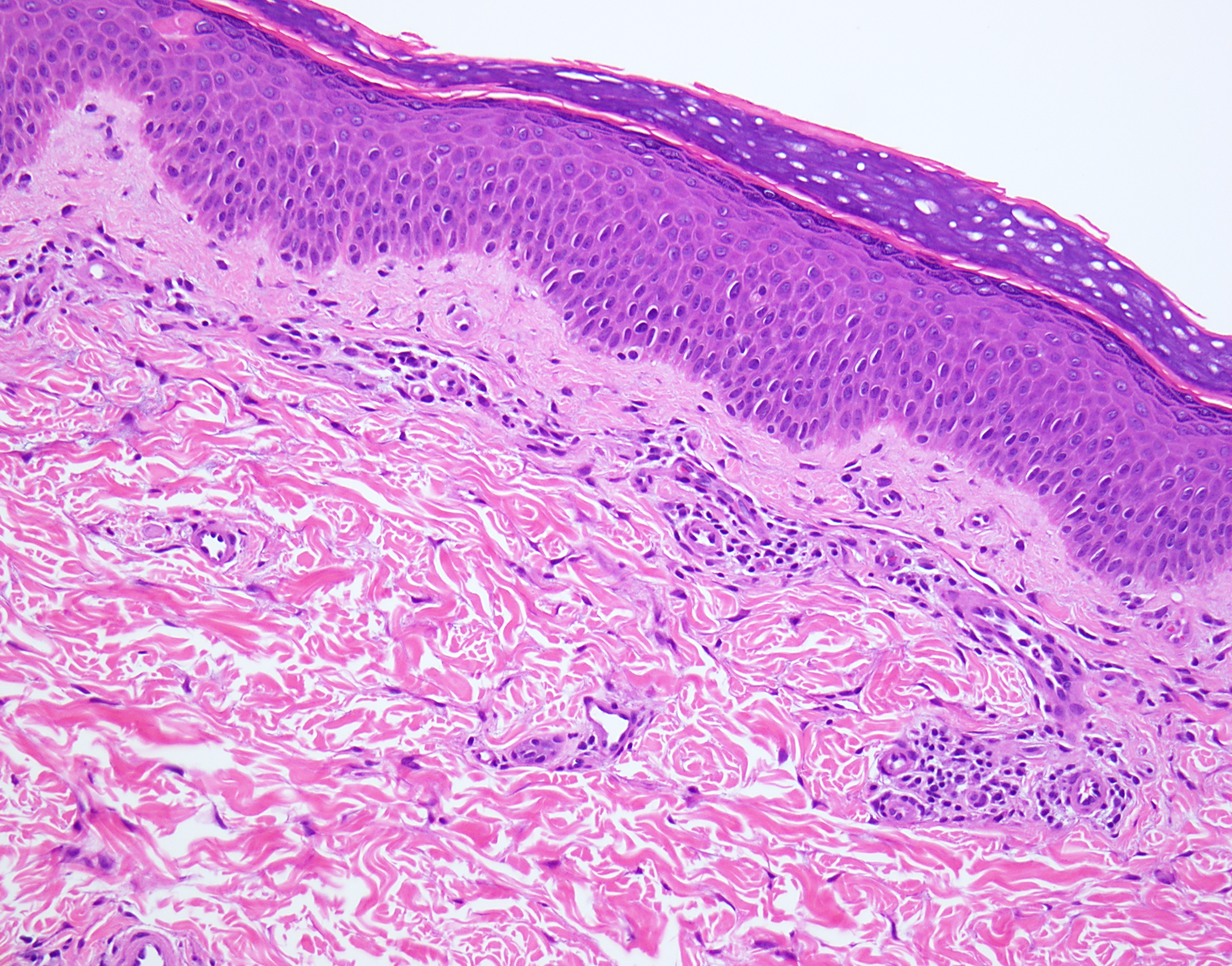
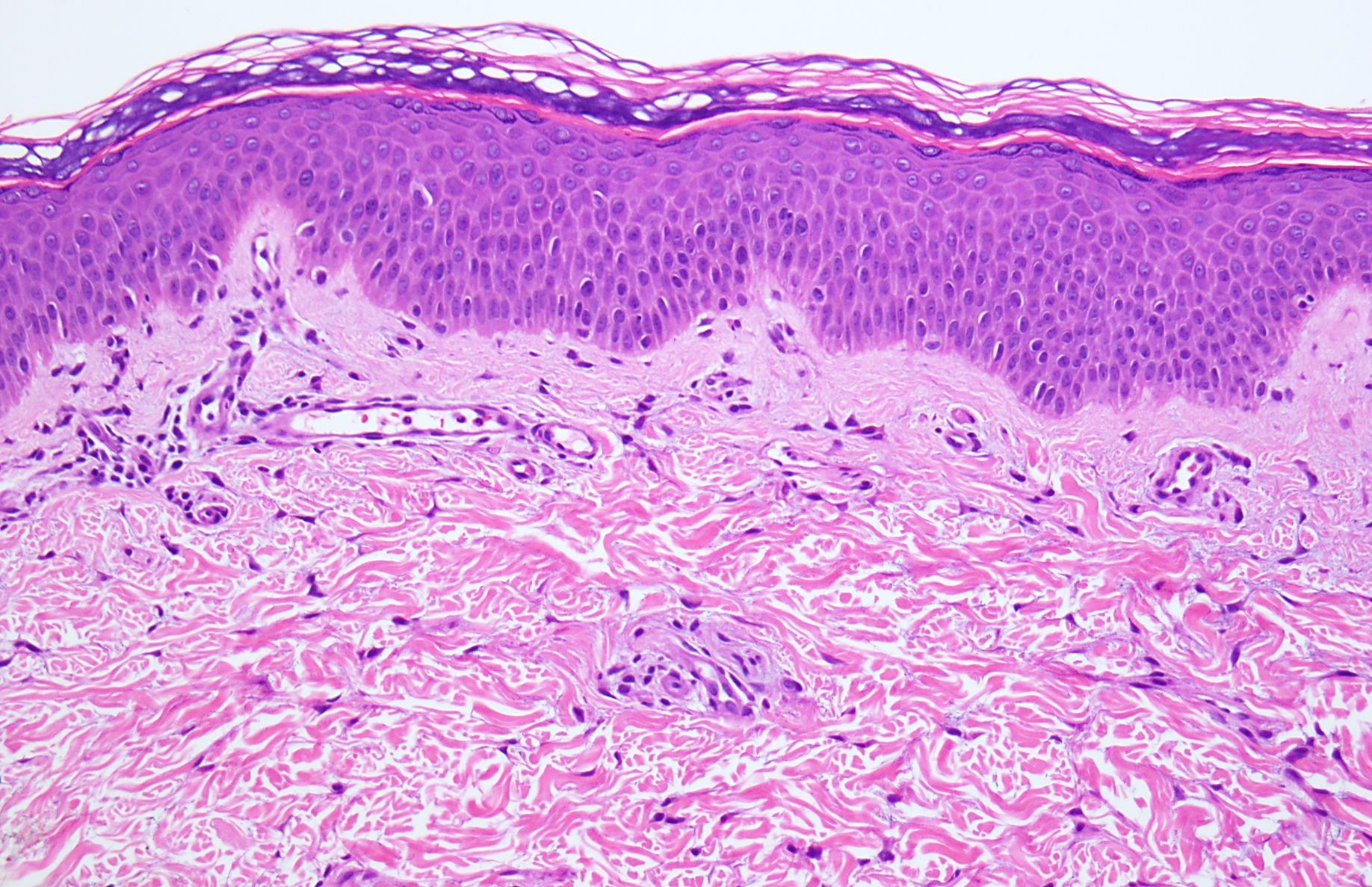
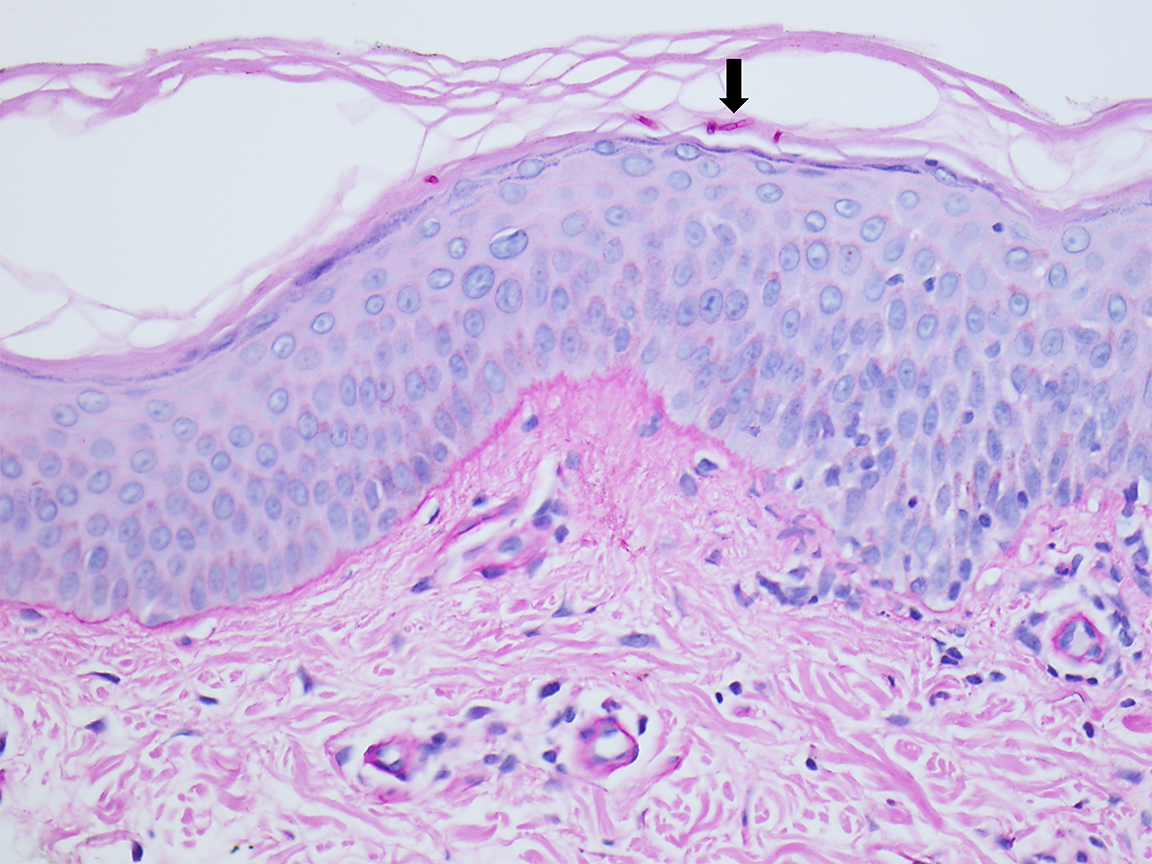
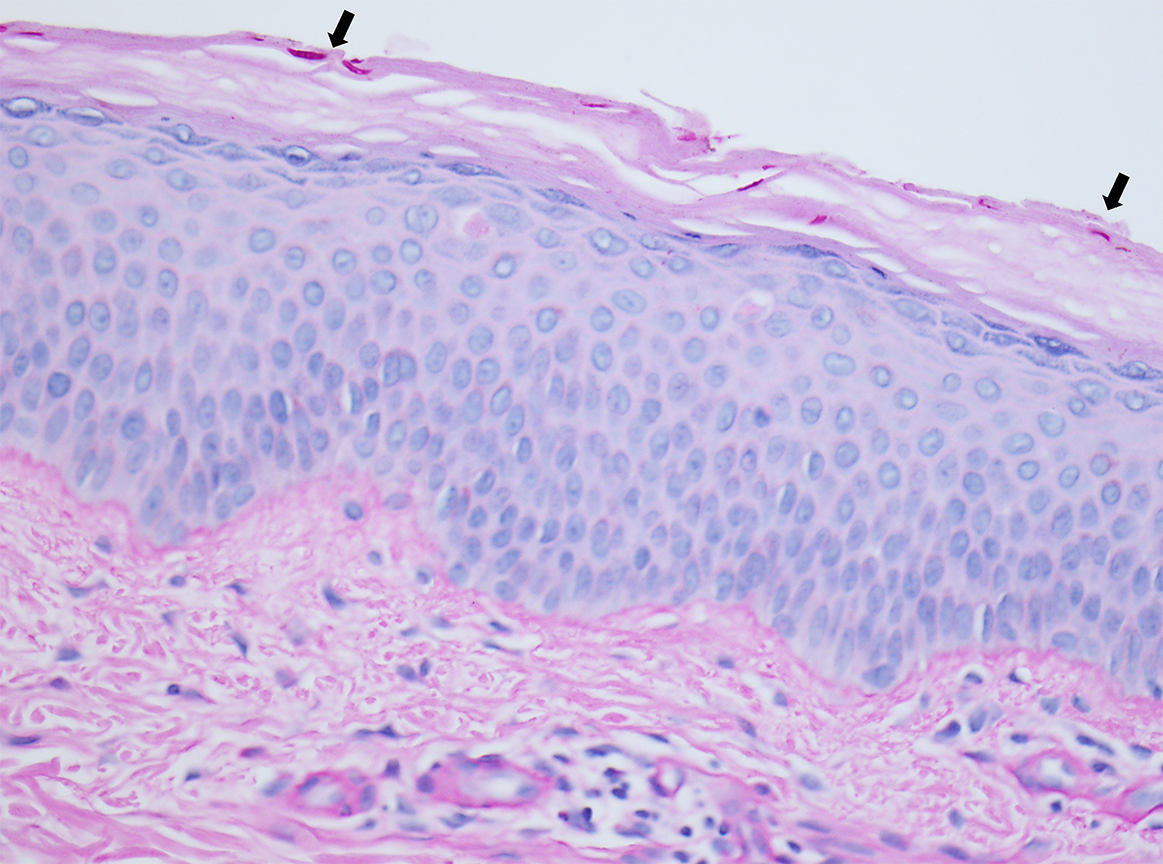
Tinea incognito is a dermatophyte infection whose clinical and histopathologic features have been altered by topical or systemic immunosuppressive therapy, most commonly corticosteroids. Clinically, the lesions may lose the characteristic sharply demarcated, annular configuration of conventional tinea and can mimic eczematous, psoriasiform, or other inflammatory dermatoses. Histologically, the findings may be relatively subtle and nonspecific, including hyperkeratosis, mild acanthosis and/or spongiosis, and a superficial perivascular lymphocytic infiltrate. Neutrophils within the stratum corneum, often a useful clue to dermatophytosis, may be sparse or absent. Fungal hyphae are present within the stratum corneum and may be inconspicuous on routine H&E sections; PAS or GMS stains can facilitate their identification.
Click images to begin the slideshow