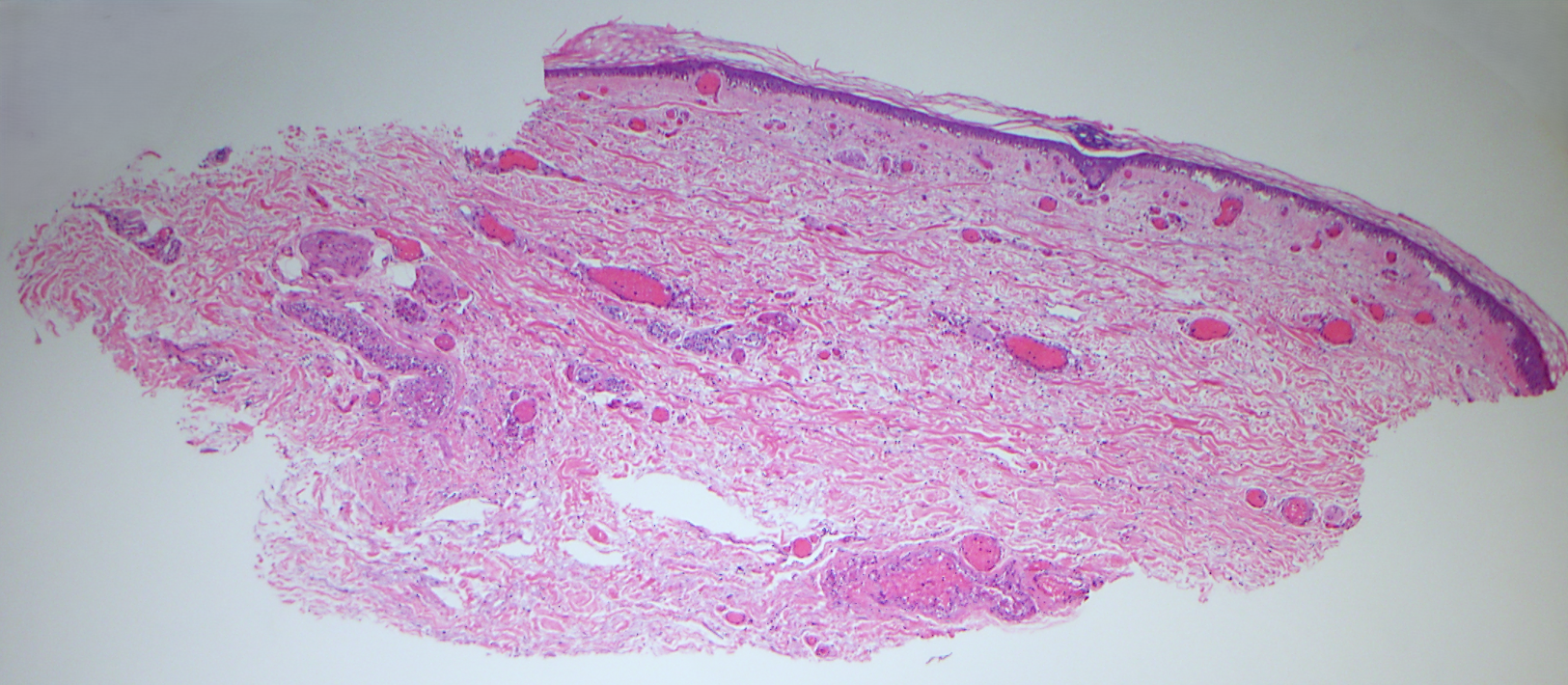
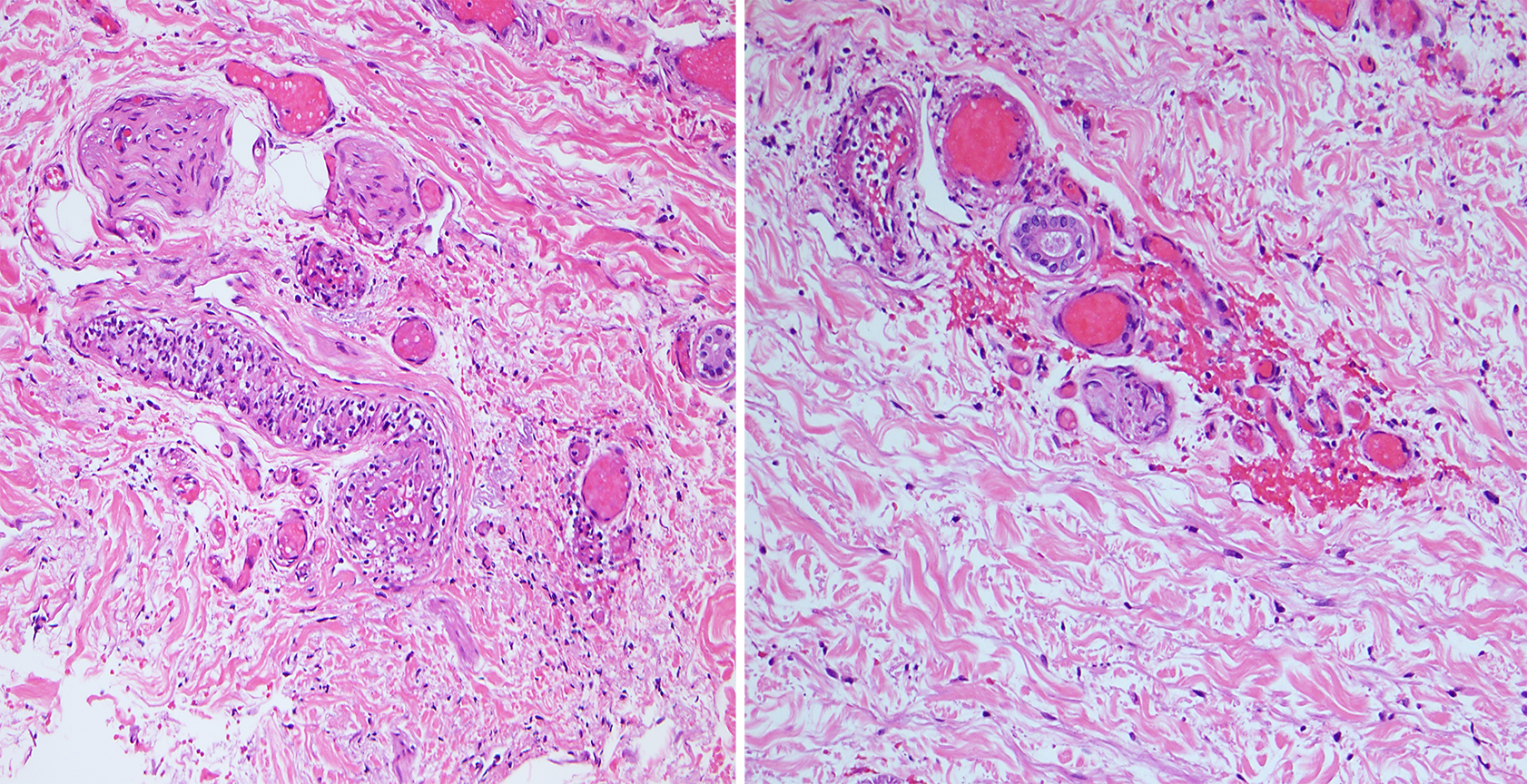
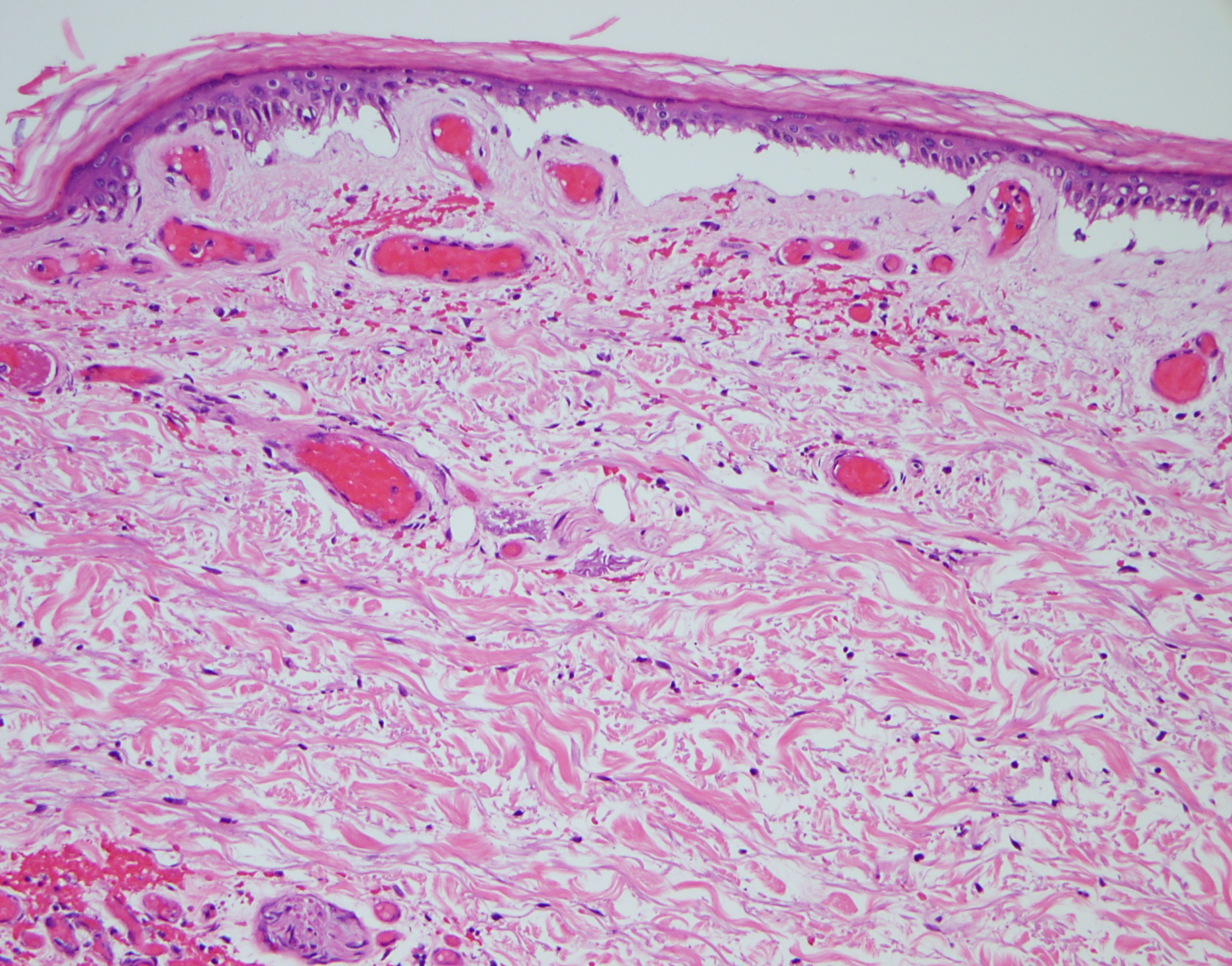
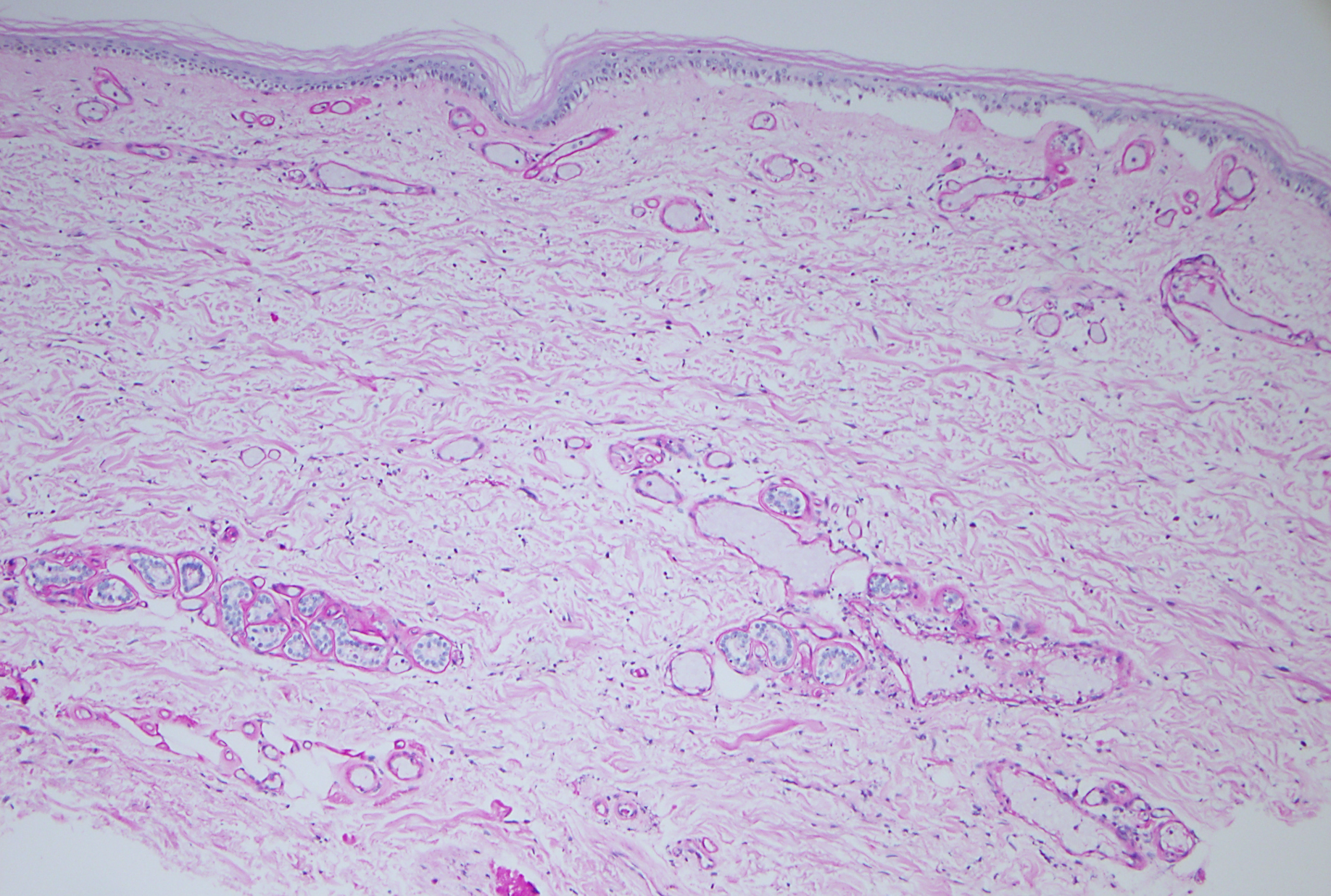
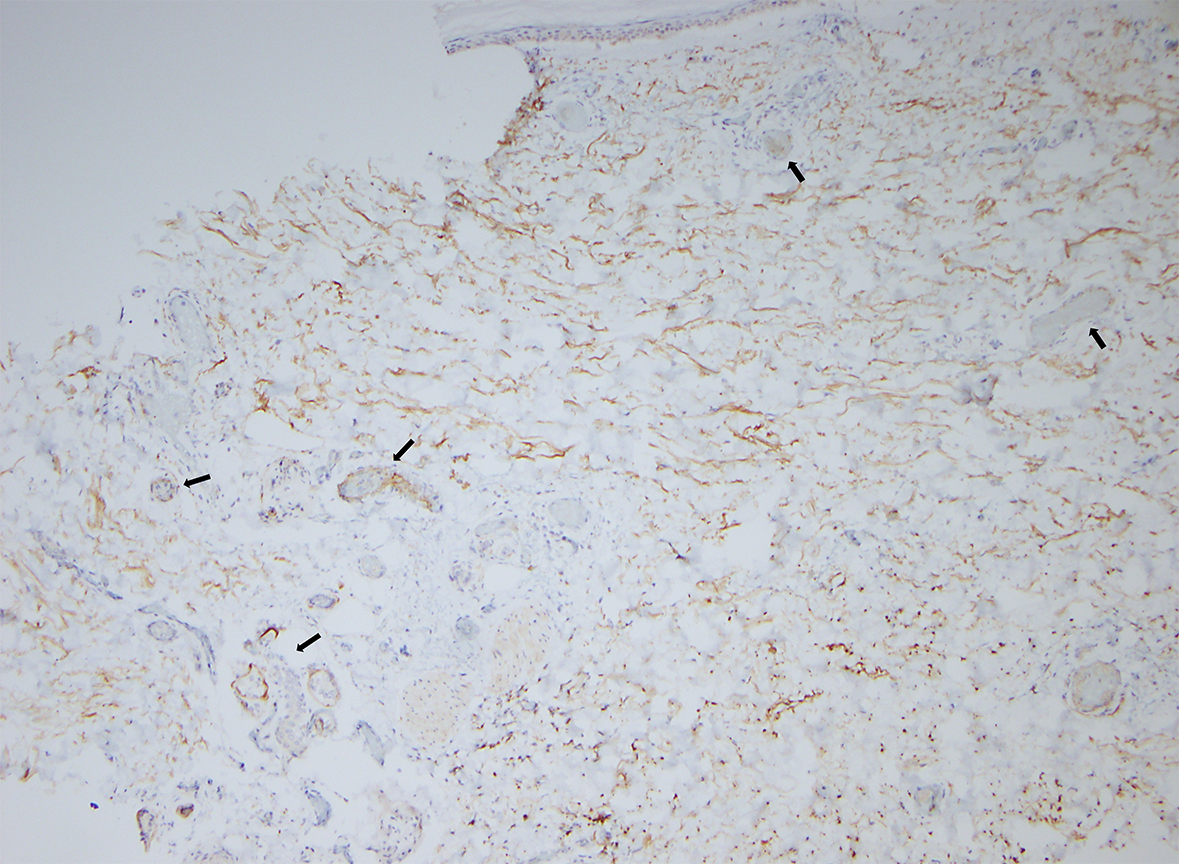
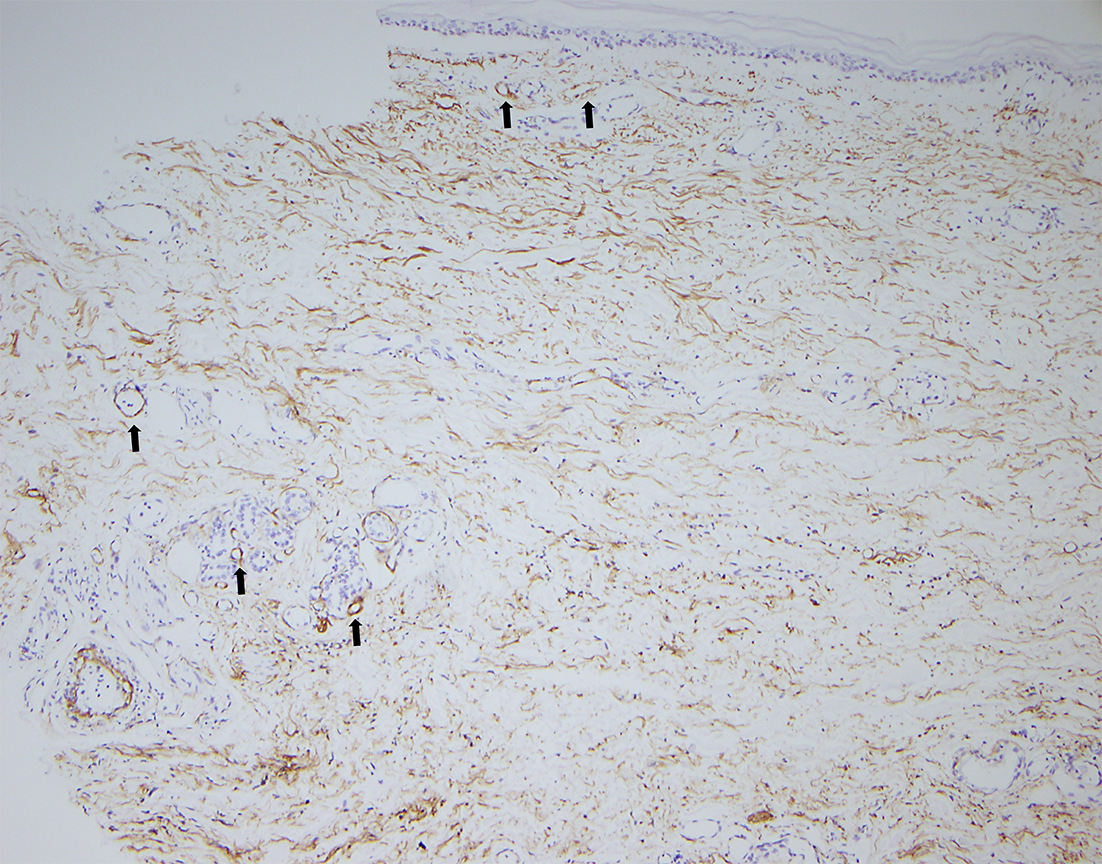
Purpura fulminans is an acute, life-threatening thrombotic vasculopathic syndrome characterized clinically by rapidly progressive retiform purpura, hemorrhagic necrosis, and cutaneous infarction, most often occurring in the setting of severe infection, disseminated intravascular coagulation, or acquired/congenital defects in anticoagulant pathways such as protein C or protein S. Histologically, it shows an acute ischemic dermopathy with vascular congestion, dermal hemorrhage, and occlusive fibrin thrombi involving small vessels, often with secondary epidermal necrosis and subepidermal blister formation. In infection-triggered cases, septic vasculitic changes may coexist, including neutrophils permeating vessel walls and inflammatory cells within thrombi. These vasculitic changes may reflect direct or immune complex-mediated infection-associated vascular injury superimposed on a thrombotic diathesis.
Click images to begin the slideshow