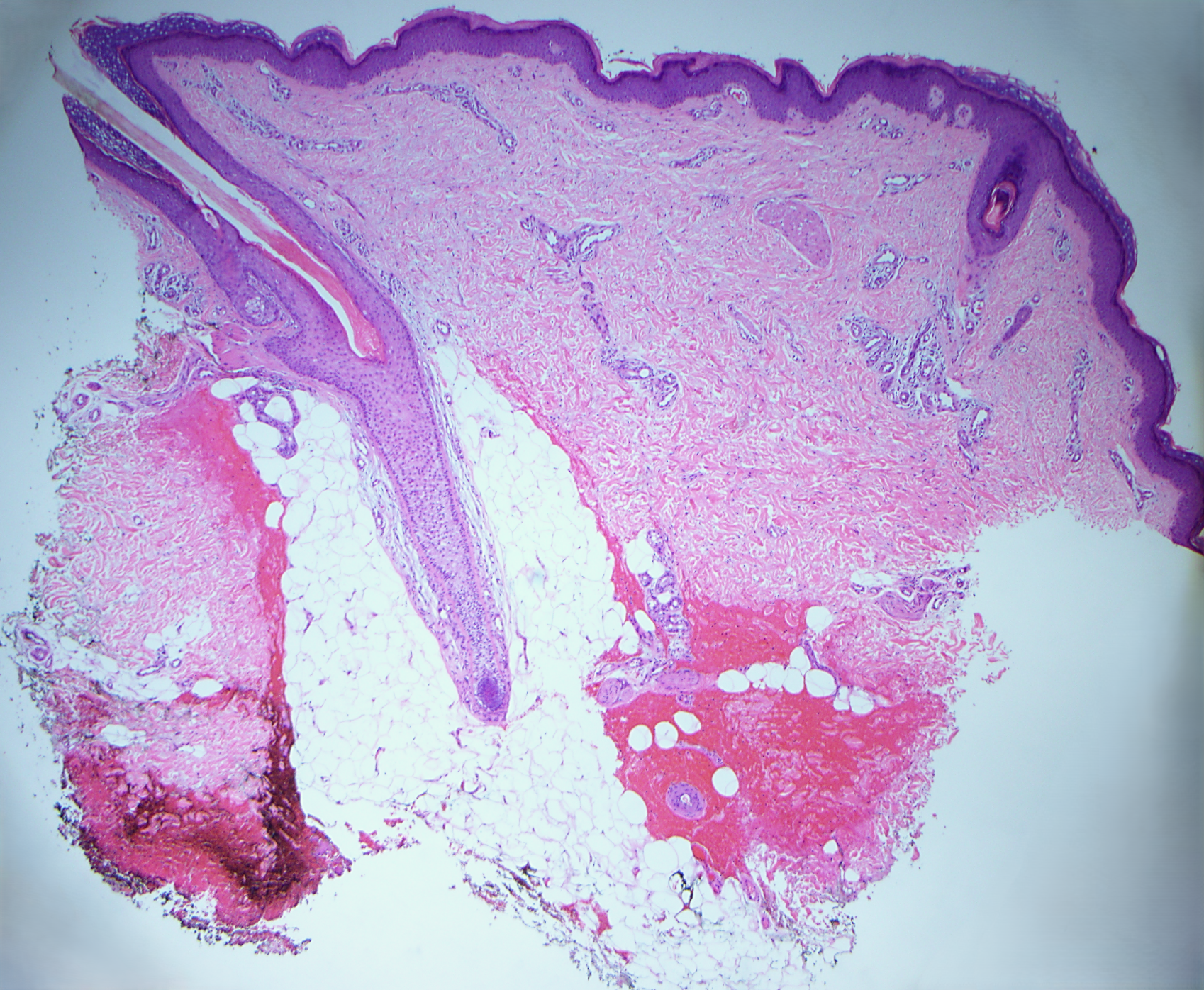
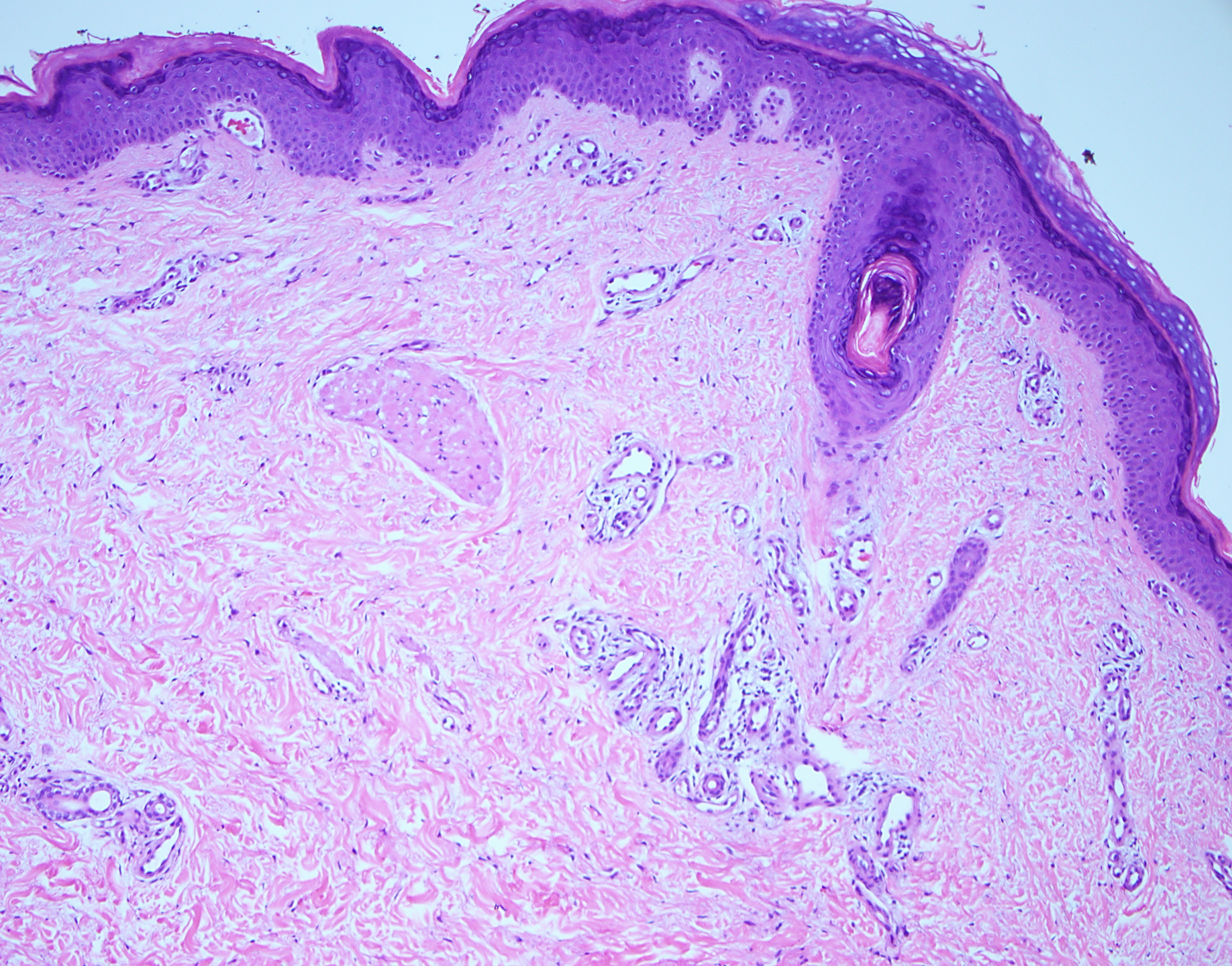
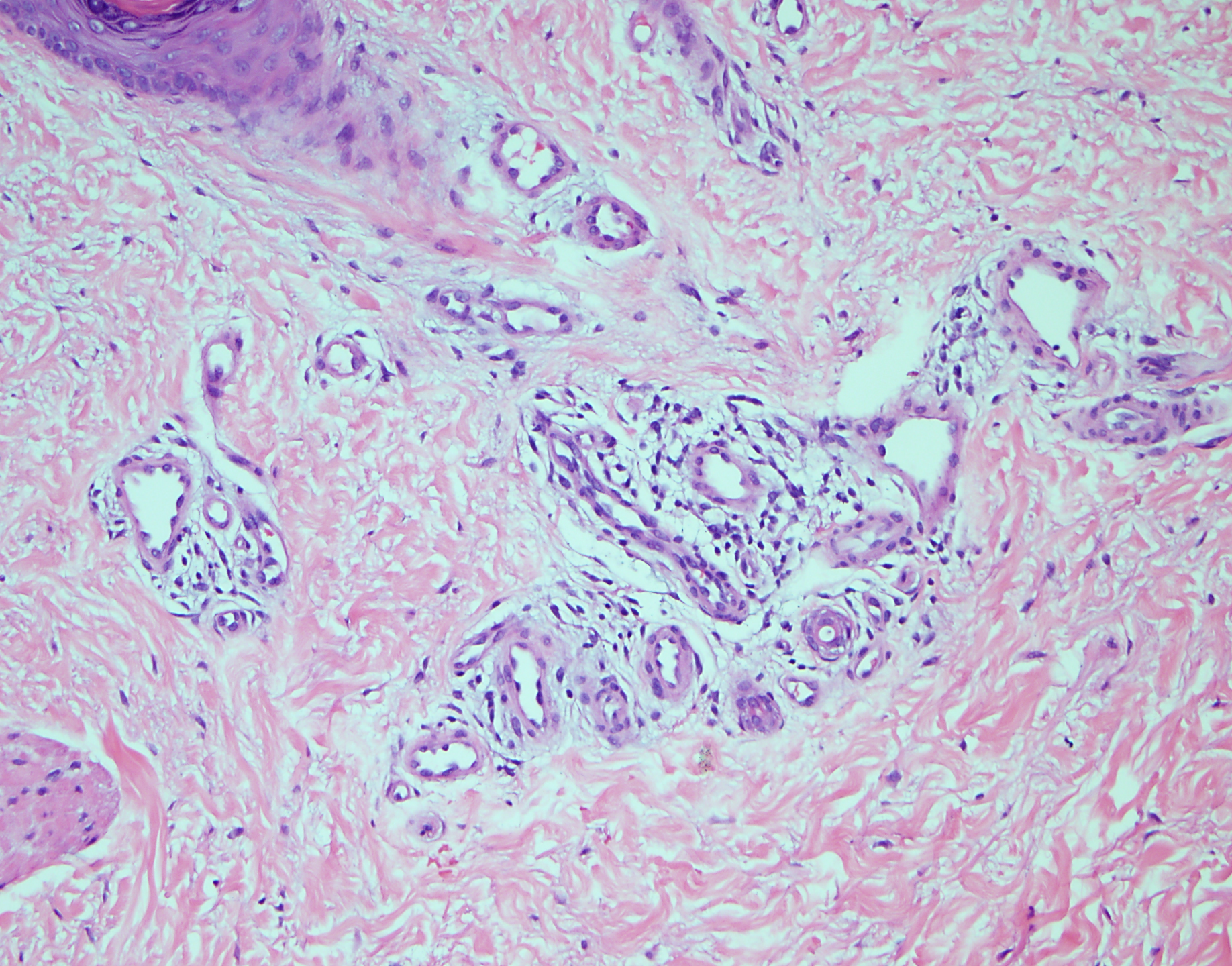
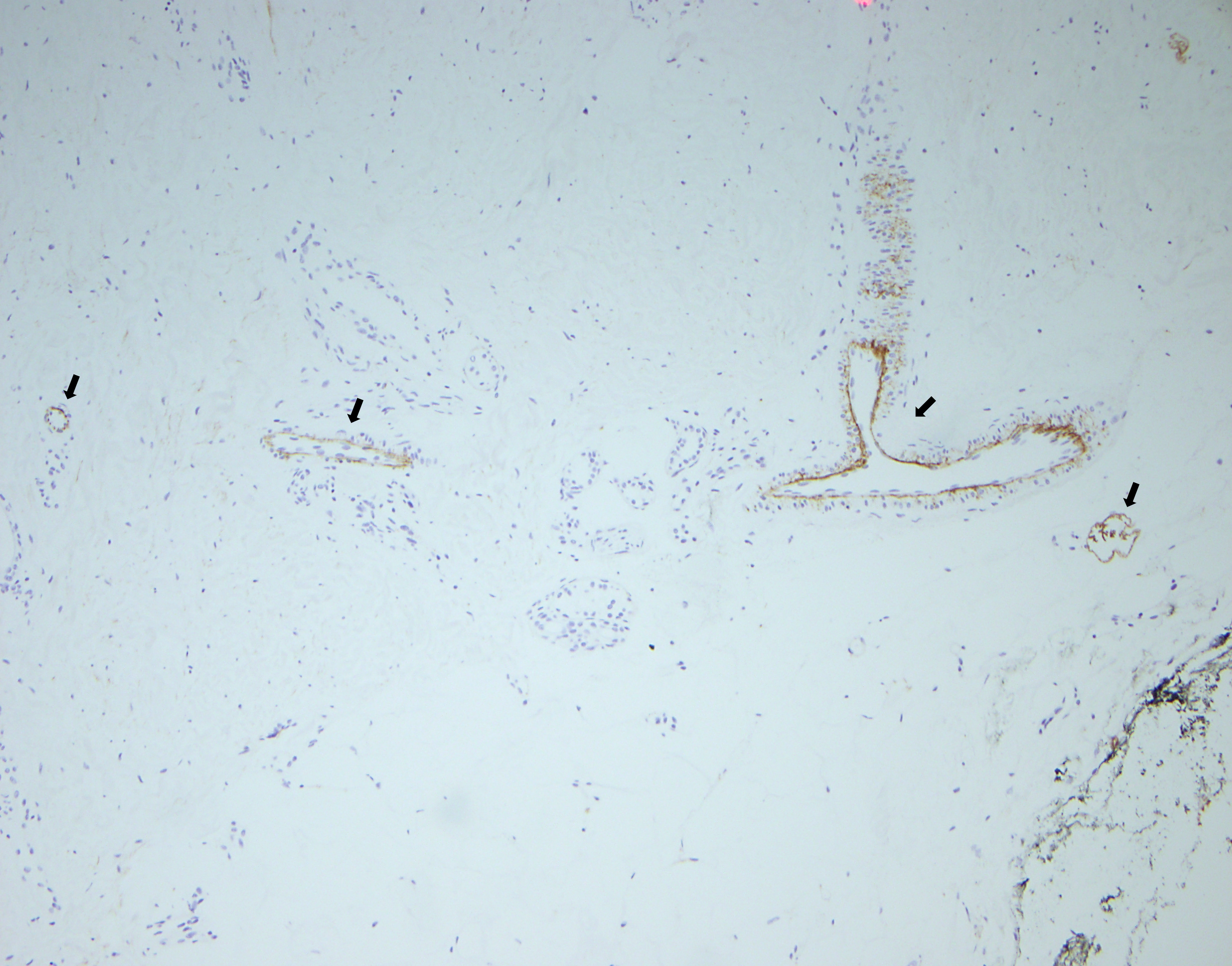
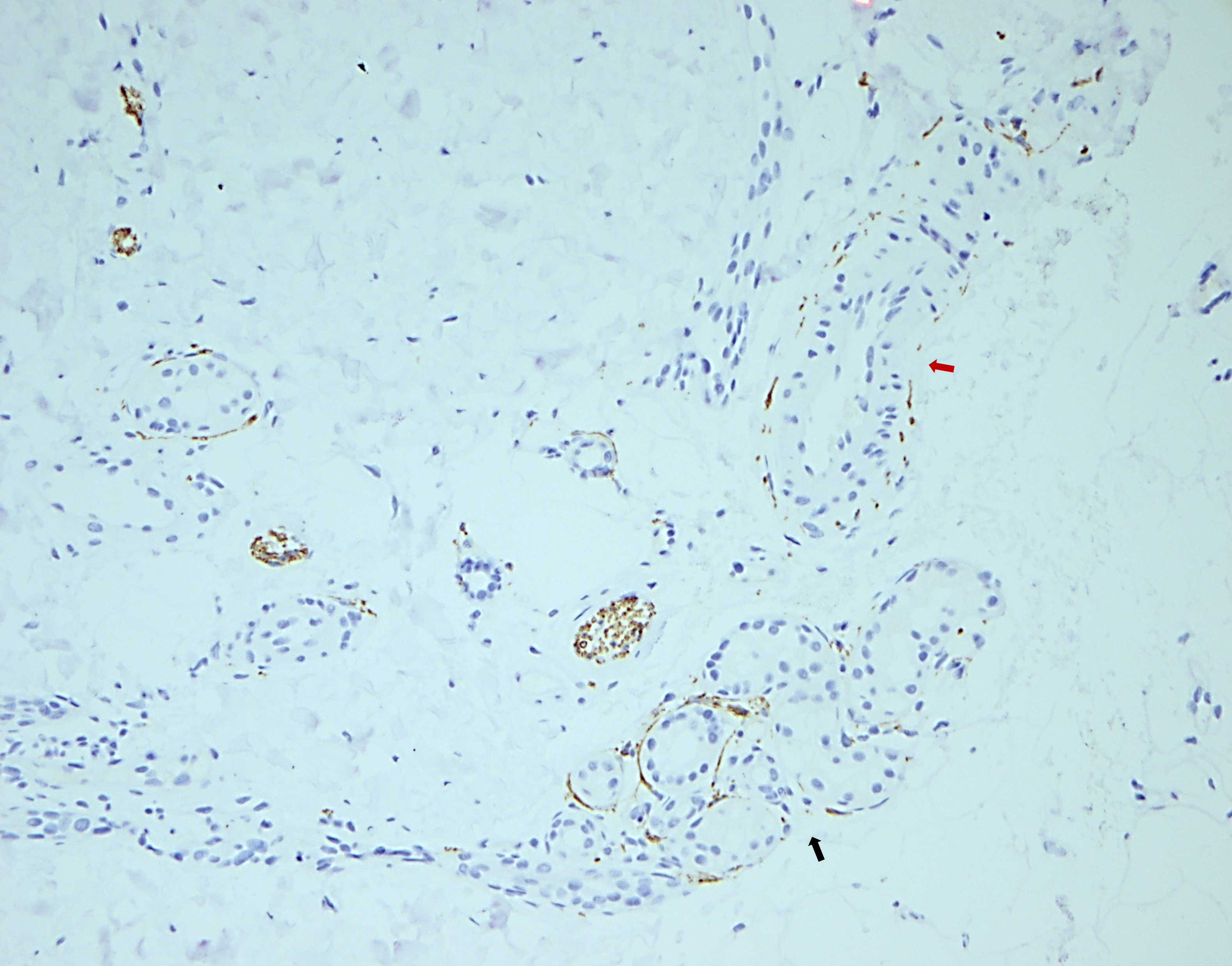
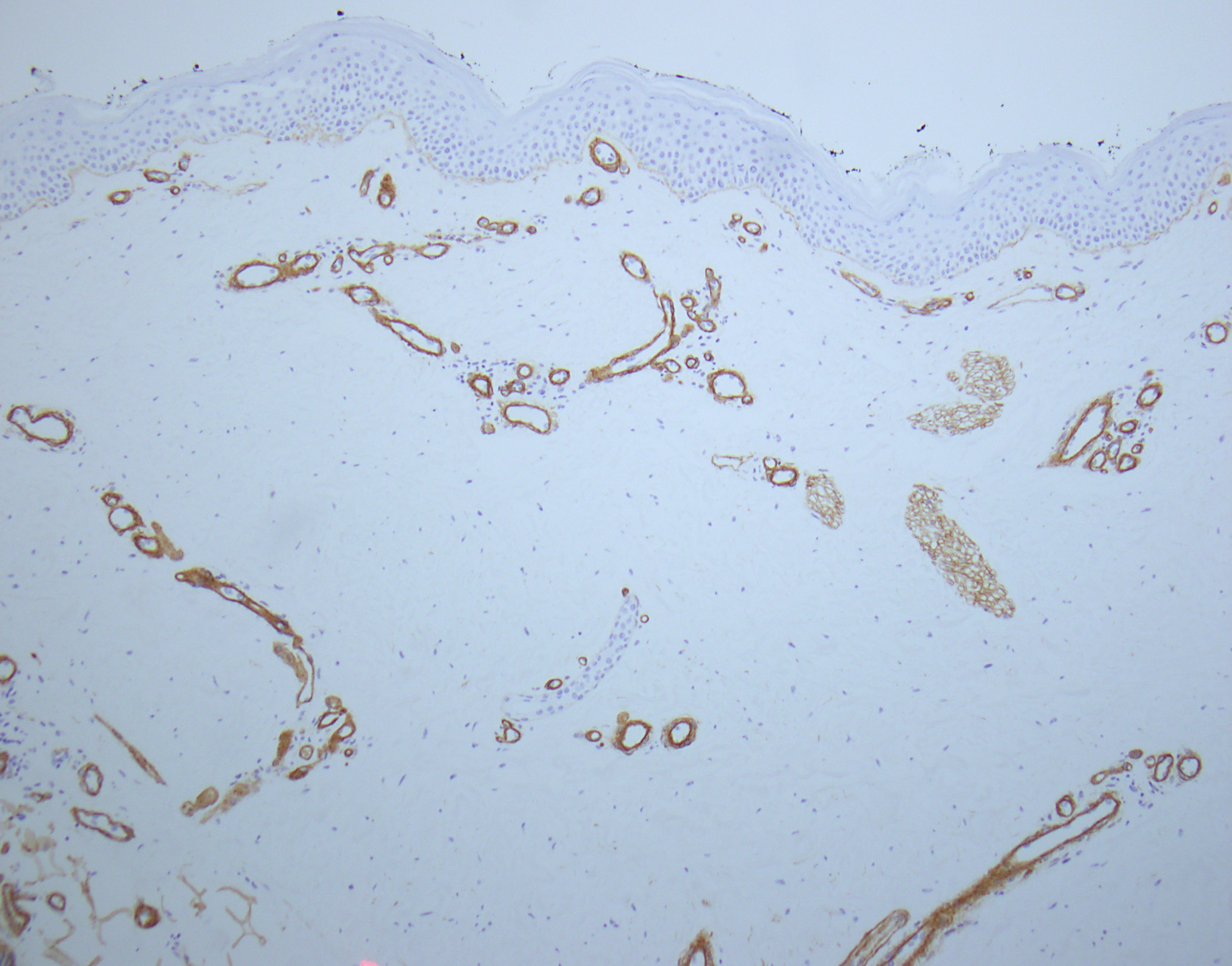
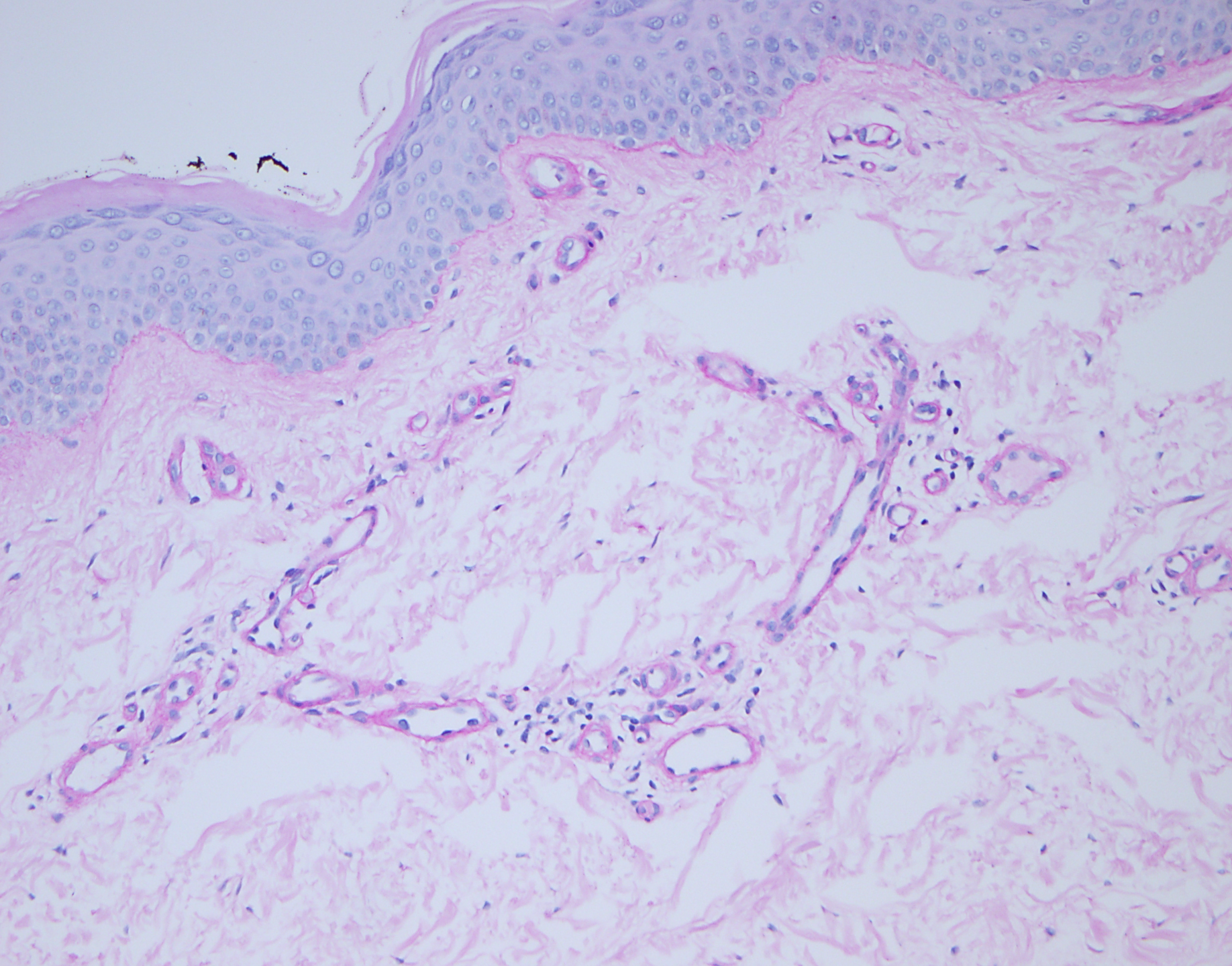
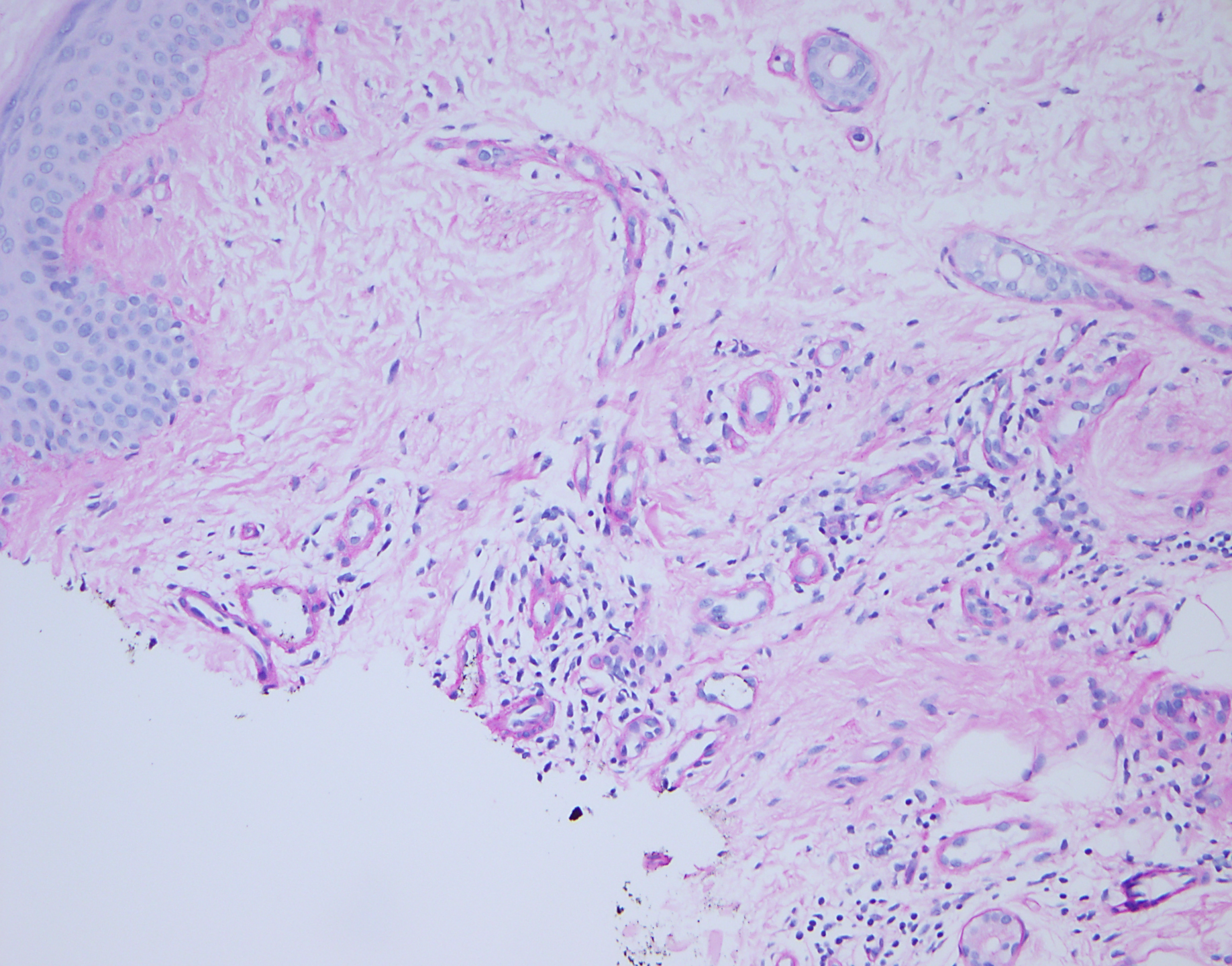
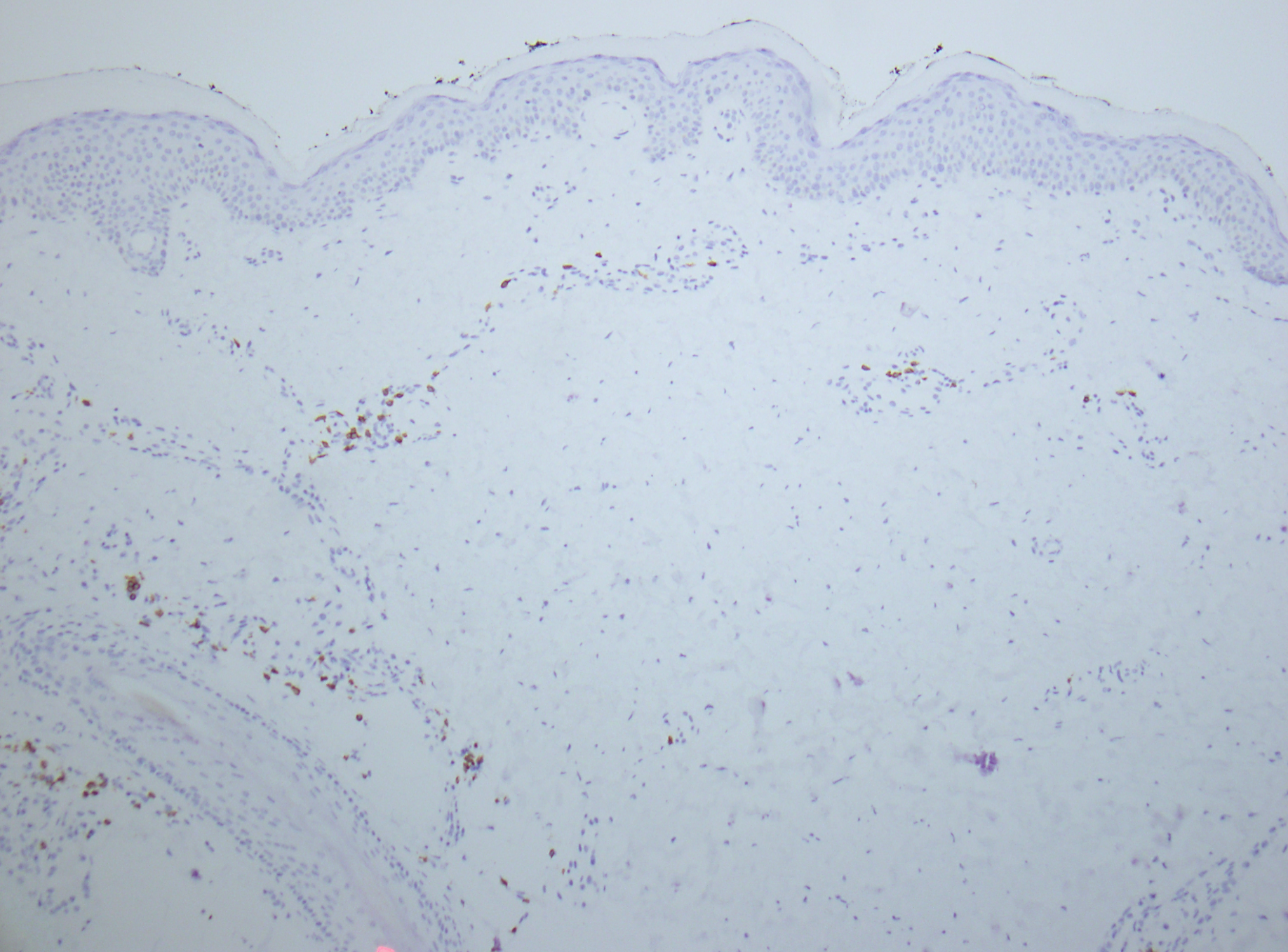
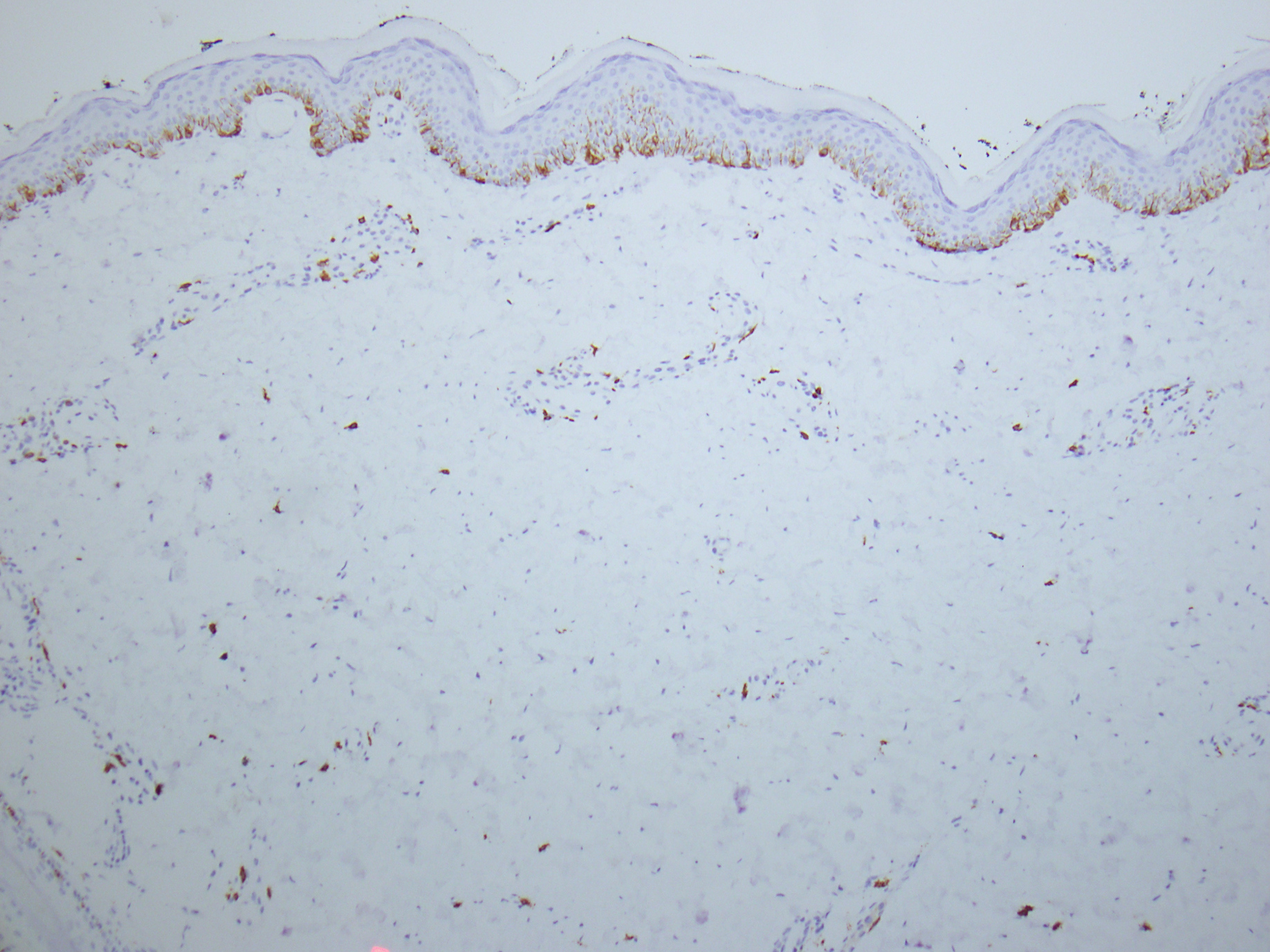
Erythromelalgia is a rare neurovascular pain syndrome characterized by episodic erythema, warmth, and burning pain, most commonly involving the extremities and typically relieved by cooling. It may occur as a primary or secondary disorder. Inherited primary erythromelalgia is classically associated with gain-of-function variants in SCN9A, whereas secondary forms may occur in association with myeloproliferative, metabolic, autoimmune, or other disorders associated with small-fiber neuropathy. Histologically, the findings may be subtle and include prominent ectasia of capillaries and venules within the superficial dermis, variable endothelial activation, and a modest perivascular mononuclear infiltrate, generally without vasculitis or thrombosis. Erythromelalgia may be viewed as a dysautonomic small-fiber neuropathy; partial autonomic denervation of eccrine structures may provide evidence of this underlying neuropathy, while reduced autonomic innervation of dermal blood vessels may contribute more directly to vascular ectasia through impaired vasoregulation. In secondary cases, ancillary studies may reveal evidence of an underlying microvascular process; vascular C5b-9 deposition, when present, may support complement-associated endothelial injury with secondary ischemic loss of small autonomic nerve fibers.
Click images to begin the slideshow