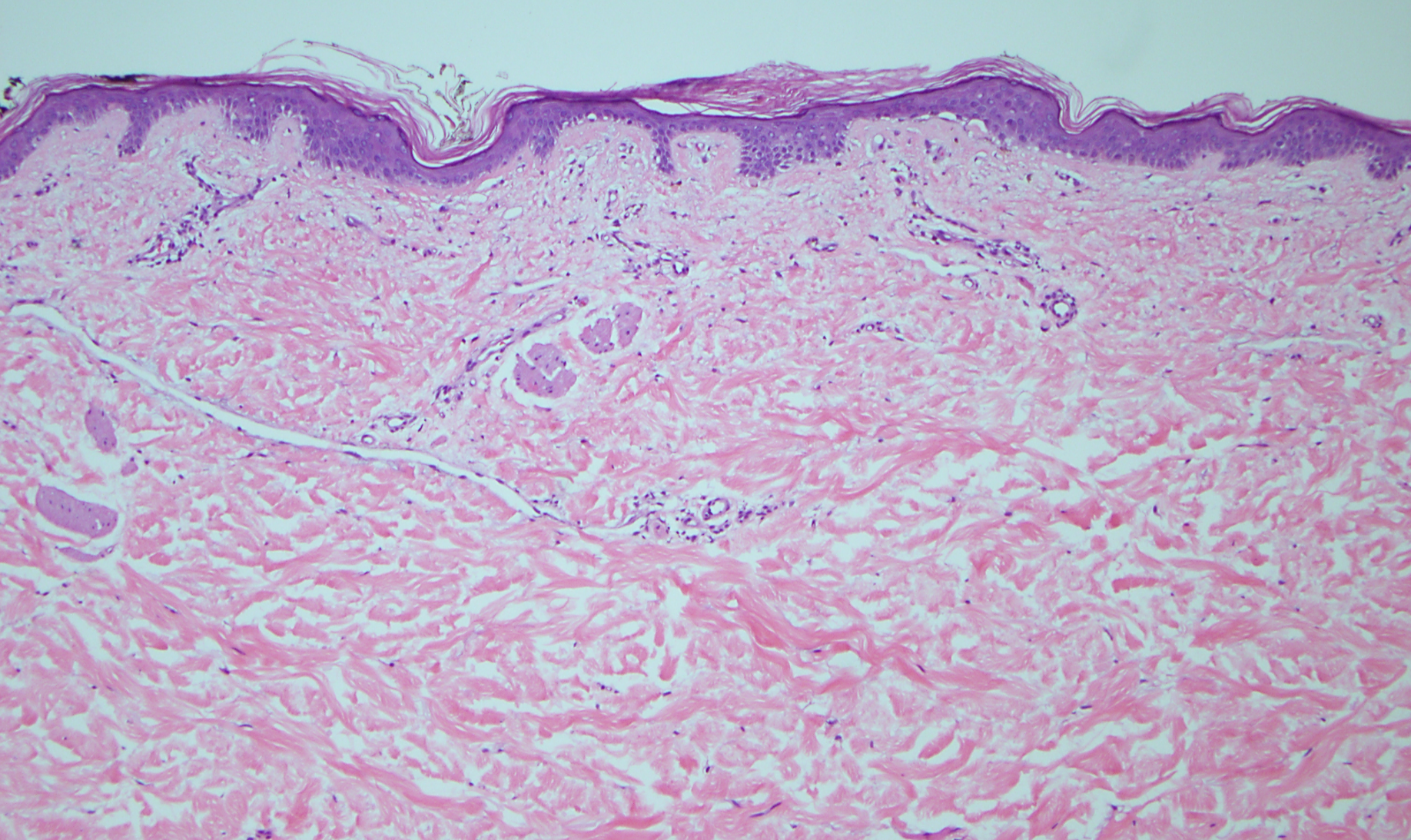
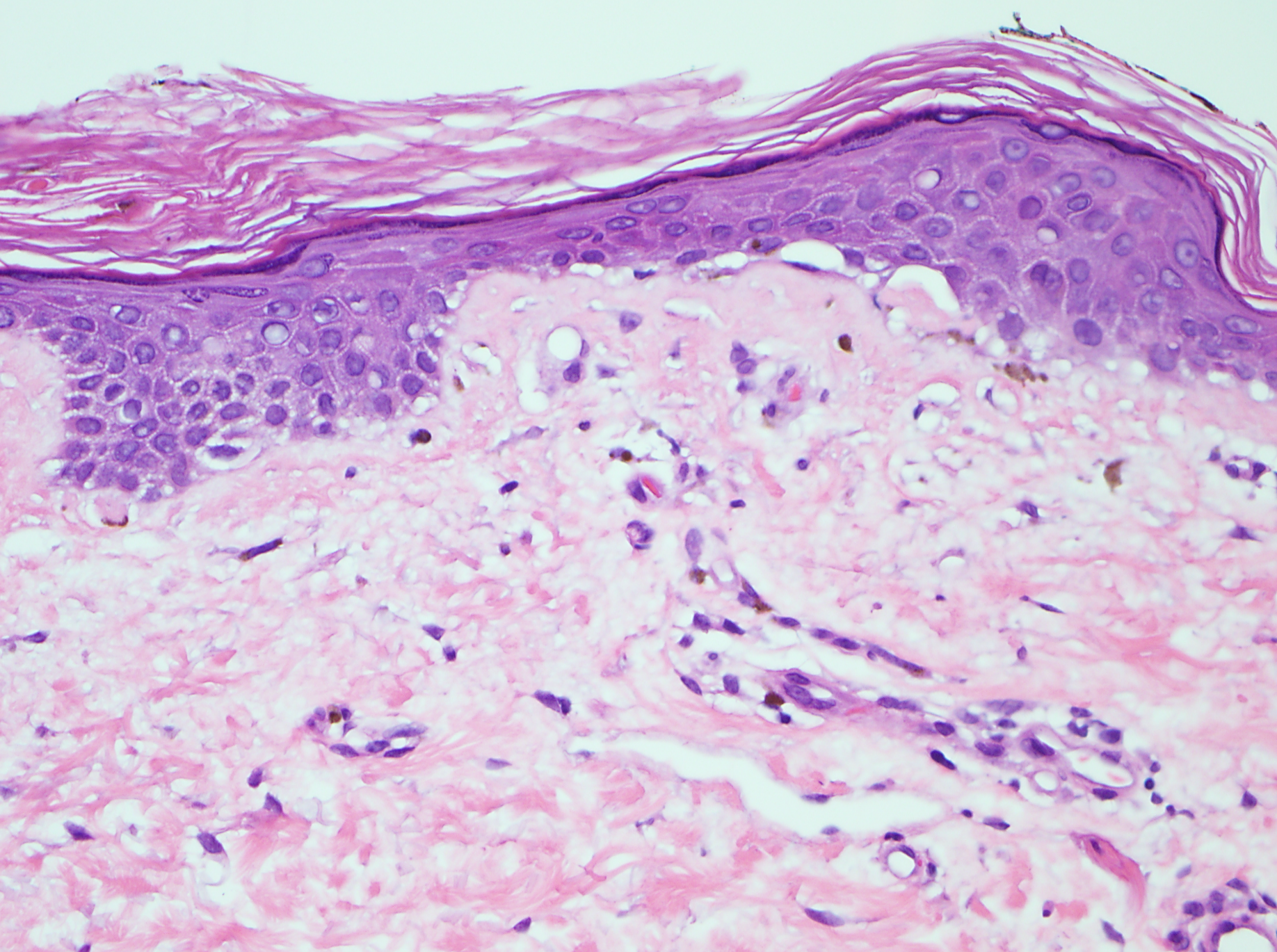
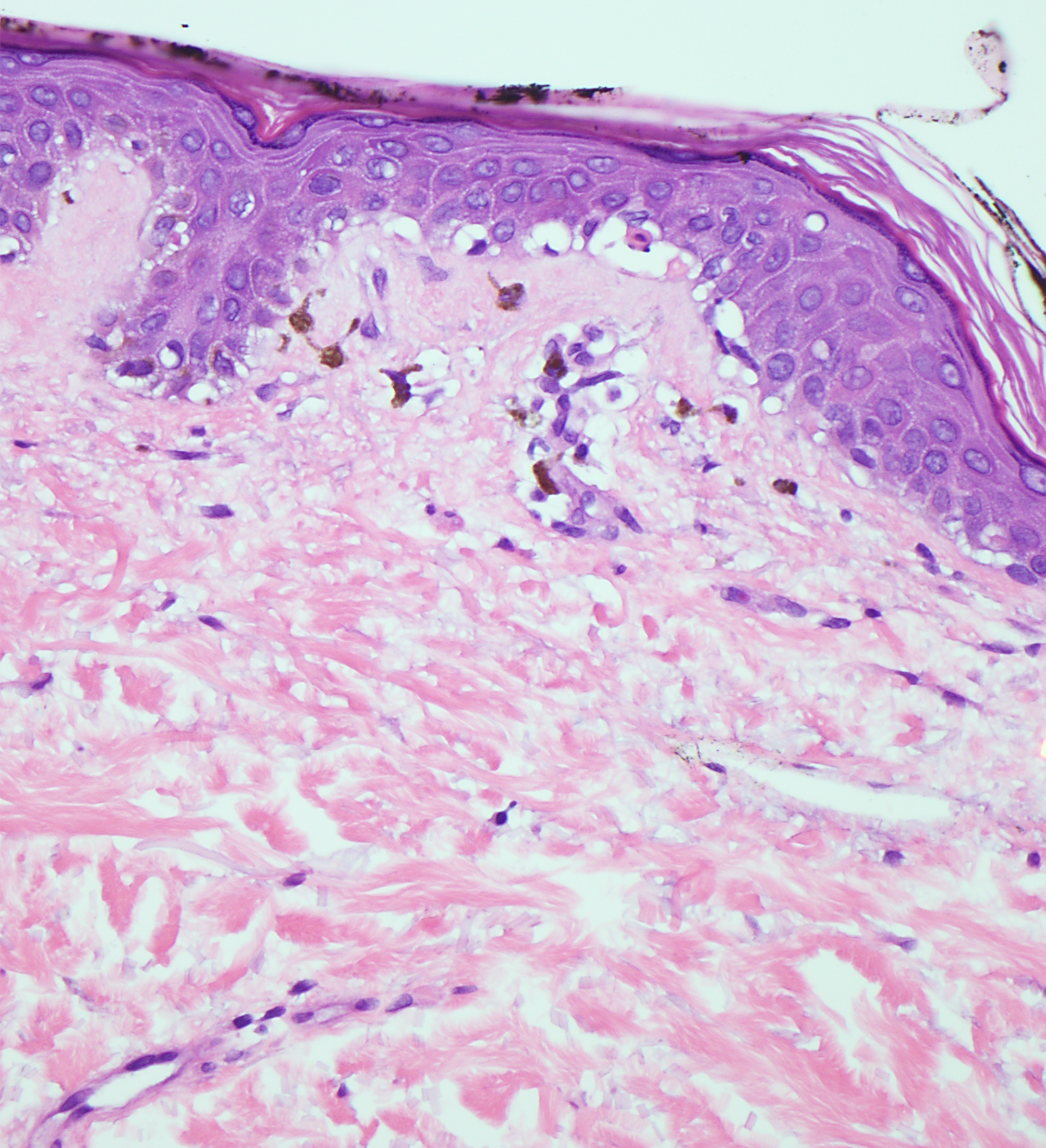
Chronic cell-poor lichenoid graft-versus-host disease is a variant of chronic cutaneous graft-versus-host disease that may occur after hematopoietic stem cell transplantation. The term “lichenoid” refers to the presence of interface epithelial injury, while “cell-poor” reflects the relative paucity of inflammatory cells accompanying this injury. Histologically, the epidermis is often attenuated and shows basal and parabasal keratinocyte damage with “squamatization,” in which the spinous layer becomes exposed to the subjacent dermis as a consequence of cytotoxic lymphocyte-mediated epithelial injury. In contrast to classic lichen planus, a dense band-like lichenoid infiltrate may be absent, with only sparse residual interface inflammation. Melanophages and mild red blood cell extravasation may be present in the superficial dermis as sequelae of epithelial injury. This cell-poor, atrophying interface pattern is characteristic of a chronic expression of cutaneous graft-versus-host disease.
Click images to begin the slideshow